Nobody throws food away on purpose. That’s what makes it hard to fix — there’s no decision to change, no moment where you chose badly. There’s just a bag of something at the back of a shelf that was fine on Tuesday.
Which is why most advice on how to reduce food waste at home doesn’t work: it tells you to care more, and you already do. The food in your bin isn’t evidence of indifference. It’s evidence of five specific, boring, mechanical leaks — and each one has a fix that takes minutes and then keeps working without you.
Here they are, in the order the food moves.
Leak 1 — you buy what you already own
You’re in the shop. You think you need tomato paste. You cannot picture the inside of your own cupboard with enough confidence to bet €2 on it. So you buy it. You now own three.
This is the cheapest leak to close and the one people are most embarrassed by, which is exactly why it goes unmentioned. It isn’t a memory failure — no one can hold the contents of a kitchen in their head. It’s a direction failure: the list was written from what you felt like eating rather than from what’s already on the shelf.
Reverse the direction and the duplicates stop. The long version of that argument is in write your grocery list backwards, and the mechanical version — a shopping tab that goes amber when you type something you already have — is in the free inventory template.
Leak 2 — the food goes where you can’t see it
Deep shelves don’t lose food. They hide it, which is worse, because hidden food gets replaced rather than eaten. Anything behind the front row effectively stops existing: you can’t cook what you can’t see, and you can’t decline to buy it either.
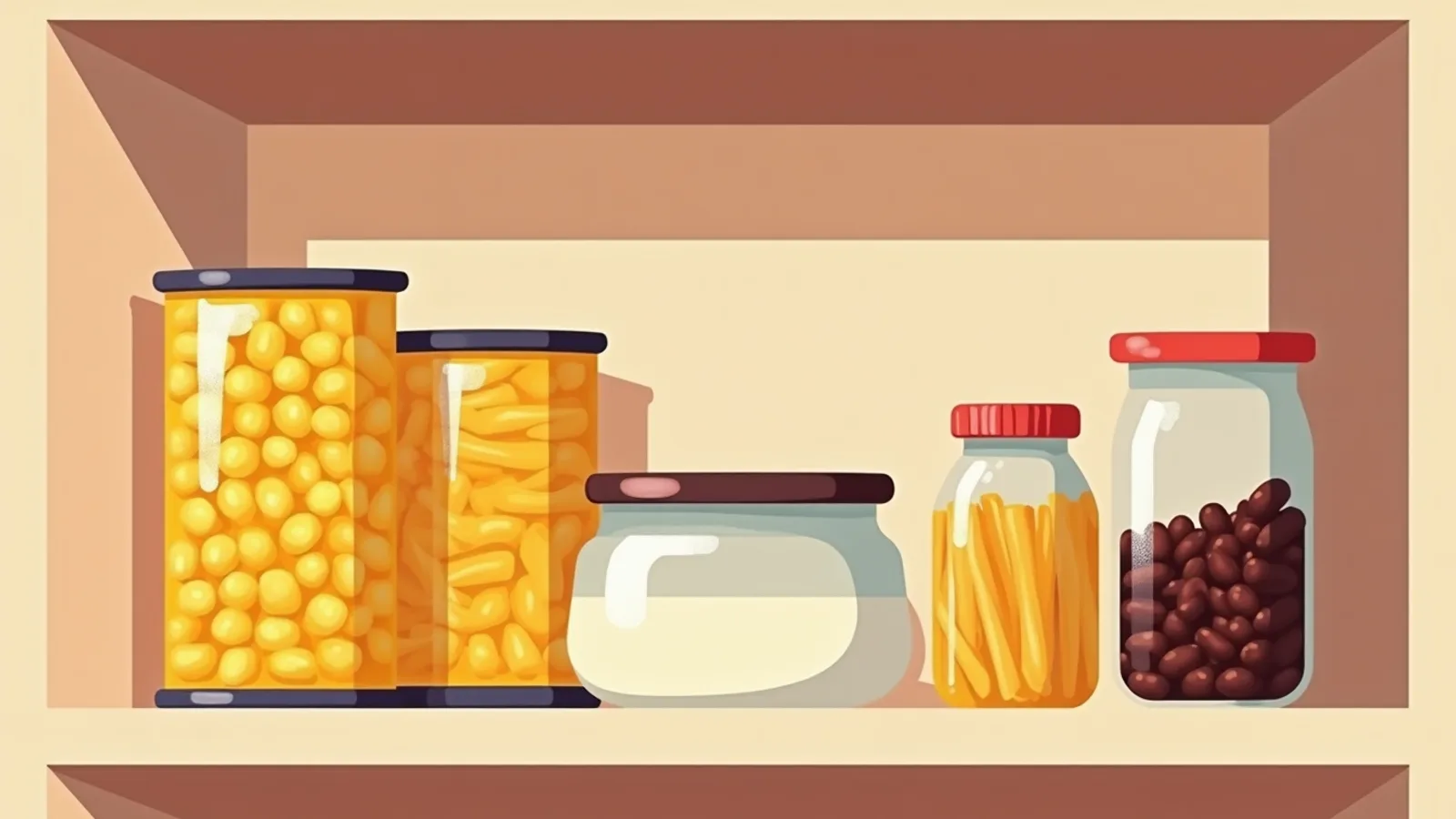
Two counters, neither of which involves buying containers. Keep the pantry one row deep so nothing is behind anything — the full case is in your pantry is lying to you. And run a short weekly audit of the fridge rather than a twice-yearly deep clean, which is the ritual described in the 15-minute fridge audit.
The audit is the highest-yield fifteen minutes in this whole article. Not because it finds much — usually four or five things — but because it converts “there’s probably something in there” into “these five things are dinner this week”, and that sentence is what actually stops the waste.
Leak 3 — it’s stored somewhere it was never going to survive
A surprising share of domestic food waste is just physics. Spinach next to apples wilts in three days because the apples are gassing it. Tomatoes in the fridge go mealy and never come back. A knotted supermarket bag is a small greenhouse, and the slime at the bottom of it is condensation doing its job.
None of that is carelessness; it’s simply not knowing which drawer is which. How to store vegetables in the fridge is the twenty-minute version — humid drawer for things that wilt, dry drawer for things that rot, five things that shouldn’t be in there at all.
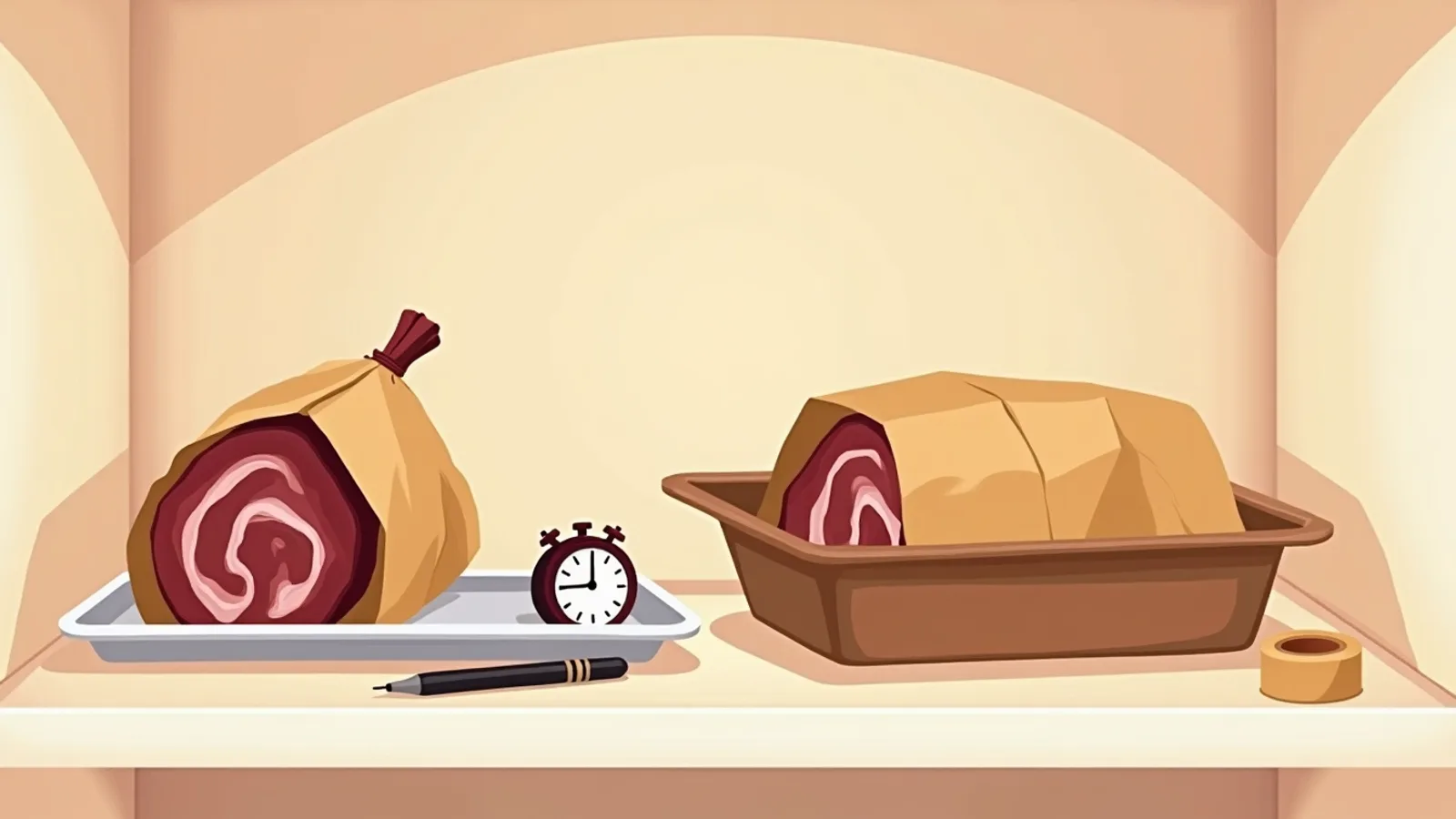
And for anything you genuinely can’t get through in time, the freezer is a pause button rather than a graveyard, provided things go in flat, labelled and dated: how to actually use your freezer.
Leak 4 — you binned it because of a date that wasn’t about safety
This one is pure lost money. Two different kinds of date get printed on food and they mean opposite things. Use by is a safety deadline and you respect it. Best before is the manufacturer’s opinion about texture and flavour — crackers past best-before are slightly less crispy crackers, not a biohazard.
Treating the second like the first throws away an enormous amount of perfectly good food, and almost everyone does it, because nobody ever explains the difference at the point of purchase. Best before, use by, and the smell test sorts out which is which, and which of your senses is actually admissible evidence.
Leak 5 — you cook forwards
Recipe-first cooking is beautifully designed to produce waste. You pick a dish, buy its ingredients, cook it once — and are left holding the exhaust: two-thirds of a tin of coconut milk, half a bunch of coriander, a knob of ginger with one ambition left in it. The next recipe needs none of those things.
Do that twice a week for a month and the fridge fills with other dinners’ leftovers, none of which go together, because none of them were ever meant to. Restaurants solved this a century ago and call it the chef’s special: the fish special exists because there is fish, and the fish will not survive until Thursday.
Cooking backwards — starting from what’s in the kitchen and working out to a dish — is the single habit that consumes the output of the other four leaks. The method is in cook backwards from your fridge; a worked example of a week that got rescued this way is in five things in the fridge that saved a grocery week.
And what about the part that genuinely can’t be eaten?
Peels, stems, cores, coffee grounds, eggshells. That’s compost, and it’s worth doing — but it belongs at the end of this list, not the start, because composting an entire courgette that died in the crisper isn’t a green victory. It’s a burial with better PR.
If you’ve no garden, the constraint is smaller than the internet suggests: composting for people without a garden covers what actually works on one apartment counter, including the version with no worms in it.
Your first week, in order
Don’t do all five at once. In rough order of return per minute spent:
- Set your fridge drawers correctly and move the apples away from the greens. Two minutes, and it starts working immediately.
- Take the five out of the fridge — potatoes, onions, garlic, tomatoes, basil. One minute.
- Do one 15-minute audit. Whatever’s about to turn goes on one shelf at eye level. That shelf is now dinner.
- Before the next shop, look in the cupboard first. Write the list from the kitchen outwards. Ten minutes, saves the most money of anything here.
- Learn the two dates. Five minutes of reading, and you’ll stop binning things that were fine.
- Only then, if you want a system that holds: write down what you have. Paper on the fridge works. The free template works better, because it does the date arithmetic and flags duplicates before you buy them.
What none of this fixes
Two things, and they’re worth saying plainly rather than pretending the list is complete.
It doesn’t survive a bad week. Every habit above assumes you have fifteen minutes and a functioning brain on the same day. Illness, deadlines and small children all beat this system, and it will fall over — the useful question isn’t how to prevent that but how quickly you restart afterwards. One audit, not a purge.
And it still needs a human to stay true. A list is only as accurate as your last update, and the moment it drifts, you’re back to guessing in aisle six. That gap is the entire reason we’re building shElf — the same list, filled in from a photo or a receipt instead of by typing, with expiry estimated for you and shared live with everyone in the house.
But be clear about the order: the five leaks above are worth closing whether or not you ever install anything. The app is a way to stop maintaining the system by hand. It is not the system.