One to two days. That’s how long chicken lasts in the fridge while it’s raw — whole bird or pieces, and it’s a shorter clock than most kitchens run on.
Every number on this page comes from the USDA’s cold food storage chart and its freezing guidance, rather than from anyone’s kitchen intuition. This is the one topic on this blog where a plausible-sounding invented figure is genuinely dangerous, so where we couldn’t source it, it isn’t here.
One assumption underneath all of it: a fridge at 4°C (40°F) or below. A fridge set by feel is usually a few degrees warmer than that, and every number below gets shorter as it drifts up. Worth a thermometer once, and then never again.
How long does chicken last in the fridge?
One to two days raw, and that’s the same whether it’s a whole bird or a pack of thighs. Cooked, you get three to four days, which is the standard leftovers window for any cooked meat.
The freezer runs the other way and surprises people: a raw whole chicken holds its quality for about a year, raw pieces for nine months, cooked chicken for four.
Turkey follows chicken exactly. Duck and game birds sit in the same family — uncooked wild game is given eight to twelve months frozen.
What about beef, pork and lamb?
Longer in the fridge, and the reason is about surface area rather than species. A whole cut — steak, chop or roast — gets three to five days, and that’s beef, veal, lamb and pork alike.
| Raw | Fridge | Freezer |
|---|---|---|
| Chicken or turkey, whole | 1–2 days | 1 year |
| Chicken or turkey, pieces | 1–2 days | 9 months |
| Steaks, chops, roasts | 3–5 days | 4–12 months |
| Mince, any meat or poultry | 1–2 days | 3–4 months |
| Sausages, raw | 1–2 days | 1–2 months |
| Bacon | 1 week | 1 month |
Once it’s cooked or cured, the picture changes again — and the deli counter is where most people are wrong by a week:
| Cooked or cured | Fridge | Freezer |
|---|---|---|
| Cooked meat or poultry | 3–4 days | 2–6 months |
| Soups and stews | 3–4 days | 2–3 months |
| Deli slices, opened | 3–5 days | 1–2 months |
| Deli slices, unopened | 2 weeks | 1–2 months |
| Hot dogs, opened | 1 week | 1–2 months |
That gap between an opened and unopened pack of ham — three to five days against two weeks — is doing a lot of quiet damage in domestic fridges. Opening the packet starts a new clock, and nothing about the packet looks any different afterwards.
Why is mince always the shortest?
Because mincing moves the outside in.
On a whole steak, the bacteria are on the surface — which is also the part that meets the heat. Mincing takes that surface, multiplies it, and distributes it evenly through the entire mass, with a little warmth from the machine on the way. One to two days for mince against three to five days for the steak it came from is the same animal, the same fridge, and only a different amount of exposed surface.
It’s the same fact behind a rule you already follow without thinking: a steak can be served rare, a burger can’t.
Do the freezer numbers mean it goes off?
No — and this is the most useful sentence here. Food kept frozen at −18°C (0°F) is safe indefinitely. The USDA states it plainly: freezer storage times are for quality only.
So a date on a frozen bag isn’t a deadline, it’s a forecast of how good dinner will be. That’s a genuinely different decision from the one in the fridge, and it’s worth knowing while you’re standing at the open drawer deciding whether to bin something. The rest of what survives freezing well, and what doesn’t, is in how to actually use your freezer.
Does the smell test work on meat?
Not for safety. This is the uncomfortable part.
There are two different families of bacteria involved. Spoilage bacteria make food smell wrong, taste off and turn slimy — they’re the ones your nose is built for. Pathogenic bacteria, the ones that make you ill, don’t generally change the smell, the taste or the look of food at all. In the USDA’s own words, one cannot tell that a pathogen is present.
So a sniff answers a quality question and tells you nothing about a safety one. Meat that smells perfectly fine can still be days past the point where it should have been cooked or frozen, which is the entire reason the clock exists. Best before vs use by is the same distinction seen from the label’s side: one of those dates is a quality opinion you’re allowed to overrule, the other isn’t.
Can you refreeze meat you’ve thawed?
Yes, if it thawed in the fridge. Food defrosted in a refrigerator can be refrozen without cooking — you lose some quality to the moisture that came out on the way, but it’s safe. Cook it first and you can freeze the cooked version regardless.
What actually breaks the rule is temperature, not the number of trips. Nothing that has sat out of the fridge for more than two hours goes back in the freezer — one hour if the room is above 32°C (90°F).
What about fish?
Shorter than everything above, and worth its own line because it’s the thing most often bought fresh and then forgotten for a day too long.
- Fatty fish — salmon, mackerel, tuna, catfish: 1–3 days in the fridge, 2–3 months frozen.
- Lean white fish — cod, haddock, halibut, sole: the same few days fresh, but 6–8 months frozen.
- Prawns and crayfish: 3–5 days fresh, and 6–18 months frozen.
- Live shellfish — clams, mussels, oysters: 5–10 days, and freezing them live is not recommended.
What to do this week
- Check the fridge temperature once, with a thermometer, and set it to 4°C or below. Every number above assumes it, and a warm fridge quietly invalidates the lot.
- Decide on the day it comes home, not on day three. Anything you’re not cooking within two days goes in the freezer immediately — that single habit is worth more than all the numbers, because it moves the decision to the moment when you still have a full range of options.
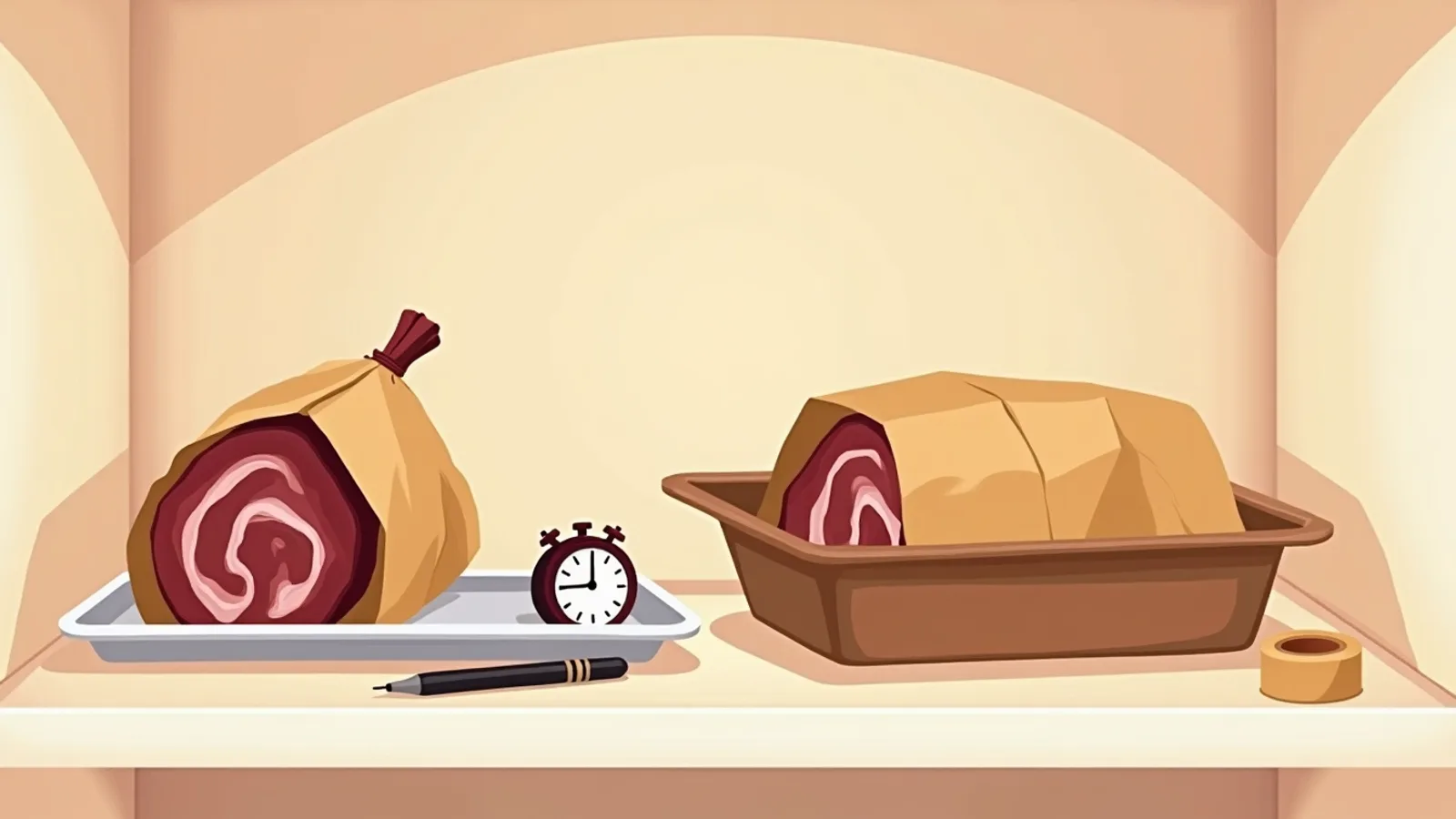
- Label it with what it is and the date it went in. Frozen meat is unidentifiable within a month, and unlabelled is the same as binned, just later.
- Keep raw meat on the bottom shelf, in something with a rim. It’s the drip rule, and it costs nothing.
- Put the deadline somewhere that isn’t your memory. A note on the door works. So does a whiteboard.
That last step is the one that decays, and it’s the whole reason we’re building shElf: it dates things as they go in and tells you before the deadline rather than after, falling back on the same USDA food data behind this article when a barcode doesn’t resolve to a real product. The chart above works without any of that — on a fridge door, in biro, tonight.
The numbers aren’t hard to know. They’re hard to hold, per packet, across a fridge with nine things in it, which is why almost everyone throws away meat they could have eaten and eats meat they should have thrown away.