For years the freezer was a graveyard. A bag of mystery meat from 2023. Half a loaf of bread, freezer-burned beyond recognition. Three ice cube trays nobody used.
The shift came when we stopped thinking of the freezer as storage and started thinking of it as a pause button. Storage is where things go. A pause button is something you press on purpose, on a specific thing, expecting to press play again.
The five things worth freezing (and how)
Bread. Slice it first. Toast straight from frozen. No more throwing away the heel of a sourdough you couldn’t finish.
Herbs in olive oil. Chop, pack into an ice cube tray, cover with oil, freeze. Drop one cube into a pan whenever a recipe says “sauté some garlic and parsley.”
Stock from scraps. Save vegetable trimmings in a bag in the freezer. When it’s full, simmer it with water and salt. Free stock, forever.
Bananas before they go. Peel, break in half, freeze. Smoothies, banana bread, “nice cream.”
Cooked grains. Double the rice you make for dinner. Freeze the rest in flat ziplock bags. Defrost in five minutes in a skillet.
How do you organize a freezer so you can find anything?
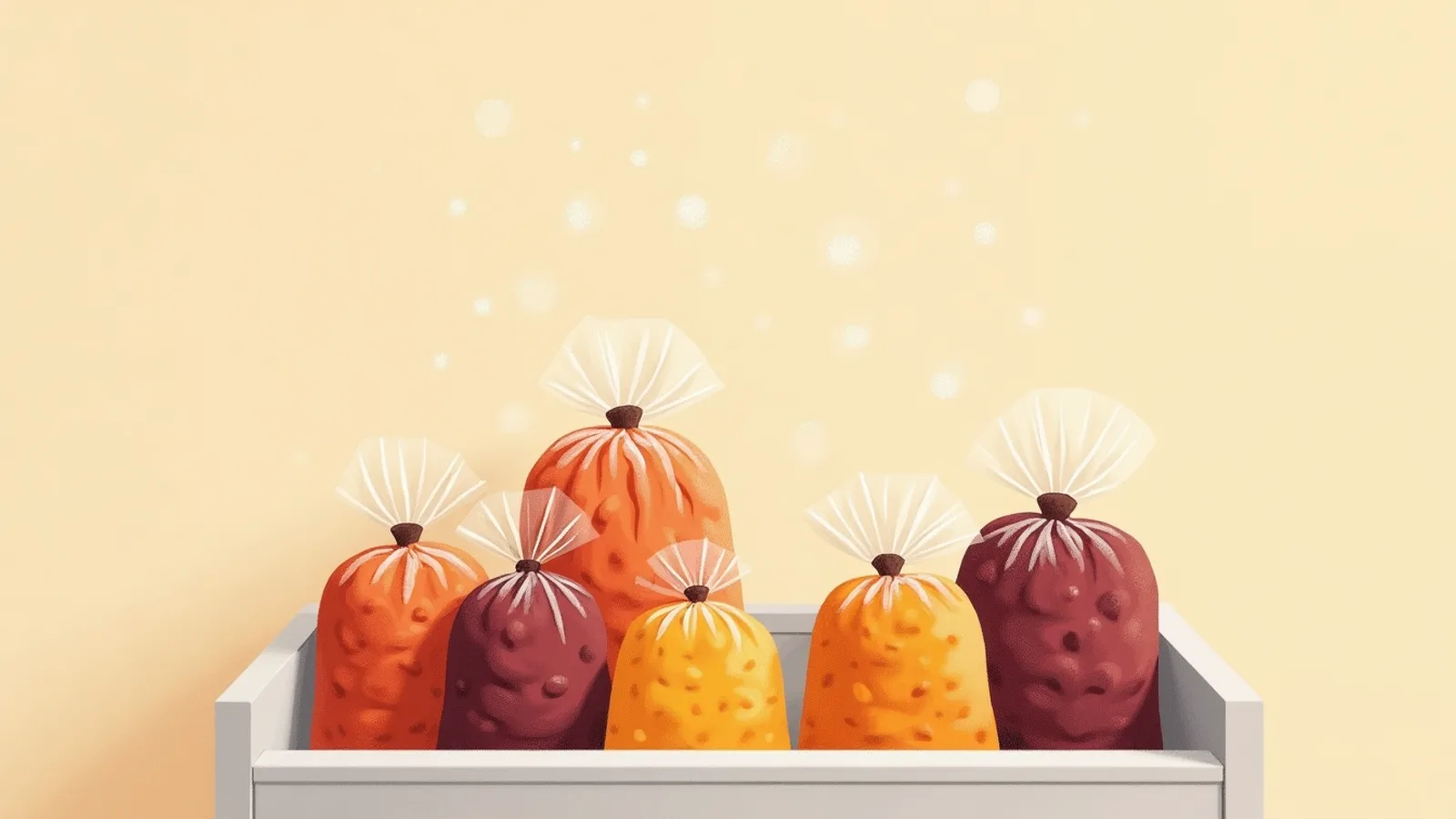
Pack everything flat, then file it upright like books — that one change does more than any container you can buy. A stack of frozen bags is a pile you excavate; the same bags standing on their edges are a shelf you read. You can see every label at once without taking a single thing out, which is the whole difference between a freezer you use and a freezer you dig through twice a year.
Three rules on top of that, depending on what you’re working with:
A freezer drawer. One category per drawer, and don’t get clever about it: bread and baking in one, meat and fish in another, cooked things and leftovers in a third. Freeze bags flat on a tray first, then stand them up once solid. Anything that won’t stand — awkward tubs, half-used bags — goes in one open box per drawer, which is the “everything else” bin every system needs and most pretend they don’t.
A chest freezer. The problem here isn’t space, it’s depth: the bottom of a chest freezer is where food goes to be forgotten, exactly like the back of a deep pantry shelf. Use bags or crates as vertical dividers, one per category, and lift the whole crate out rather than reaching past things. Nothing goes in loose.
An upright with shelves. Treat each shelf as a drawer, and give the door to small, frequently-grabbed things — peas, ice, herb cubes. The door is the warmest part of any freezer, so it’s the wrong place for the meat you’re keeping for three months.
Whatever the shape, newest goes behind oldest. First in, first out is the same rule that keeps a pantry honest — and for the same reason: the thing you can’t see is the thing you buy twice and throw away once.
What doesn’t freeze well?
Anything mostly water and meant to be eaten raw, plus a short list of things that come back wrong. Worth knowing before you find out with dinner:
- Salad leaves, cucumber, radishes. The water inside them turns to ice crystals, punctures the cell walls, and they thaw into slime. There is no technique that fixes this.
- Whole potatoes. They go grainy and oddly sweet. Cooked and mashed is fine; raw and whole is not.
- Cream sauces and plain yogurt. They split. Sometimes a hard whisk brings them back, mostly it doesn’t.
- Fried anything. You can freeze it, but you can’t freeze the crisp.
- Eggs in the shell. They expand and crack. Beaten, in a tub, they freeze perfectly.
Vegetables you do want to freeze mostly want blanching first — thirty seconds to a couple of minutes in boiling water, then straight into cold. It looks like a fussy extra step and it isn’t optional: it switches off the enzymes that otherwise keep degrading colour, texture and flavour while the vegetable sits there frozen.
How long can you actually freeze food?
Indefinitely for safety, and a few months for quality — those are two different questions and mixing them up is why freezers fill with things nobody will eat. At a steady −18°C / 0°F, bacteria don’t grow, so food stays safe essentially forever. What degrades is everything else: texture, colour, taste. Freezer burn is that process made visible — moisture escaping the food and refreezing as frost on the surface.
In practice: bread and cooked grains are best within a month or two, most vegetables and cooked dishes within three to six, and raw meat within six to twelve depending on the cut. Past that it won’t hurt you, it’ll just be disappointing — which is its own kind of waste, because disappointing food ends up in the bin anyway. The cut-by-cut version of those meat numbers, fridge as well as freezer, is in how long the meat actually lasts.
The rule that changed everything
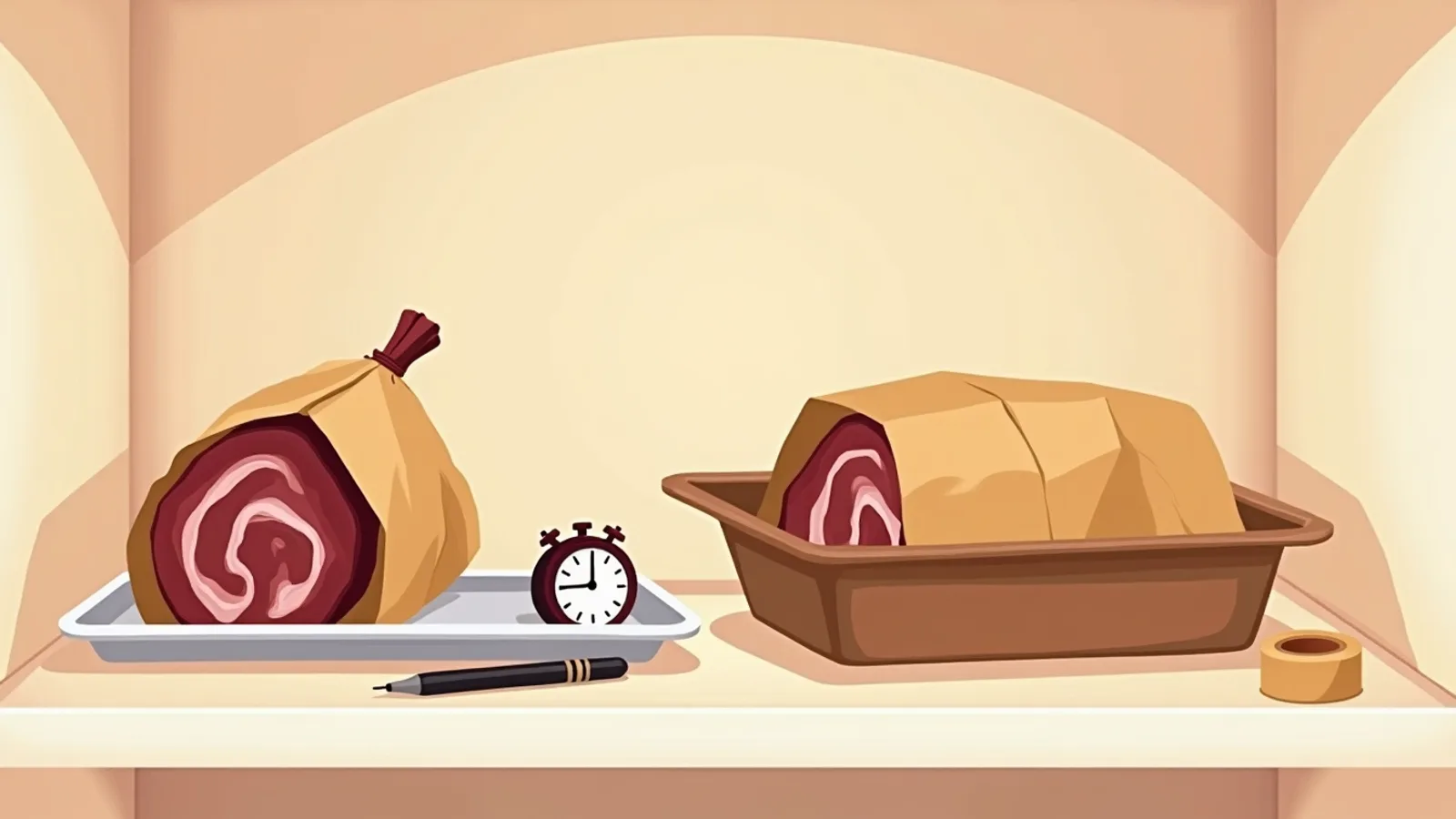
Label everything with a date in marker on a piece of masking tape. Sounds boring. It is. But it’s the difference between “use this week” and “throw out in six months.”
The natural next step, once the labels exist, is to keep the list outside the freezer — because the whole point is not opening the door to find out what’s in there. A page on the fridge works. So does a shared note. If you’d rather it did the arithmetic for you, our free pantry inventory template has a Where column with Freezer in it and works out how long things have been sitting.
Fifteen minutes, once, and then never again
- Take everything out. Yes, everything — this is the only time you’ll do it.
- Bin what has no label and no plausible identity. If you can’t name it, you won’t cook it.
- Repack what’s left flat, in bags, one category per zone.
- Label every single one with what it is and today’s date.
- Write the list down somewhere outside the freezer, and add to it as you go.
Then treat it like the fridge: a short check-in beats a big clear-out. The same weekly habit that keeps a fridge honest — see the 15-minute fridge audit — takes about ninety seconds for a freezer, because you’re reading labels rather than sniffing things.
Your freezer isn’t a black hole. It’s a tool. Use it like one.
The labelling is the system, and it’s also the bit that quietly stops happening around month three. That’s what we’re building shElf for — what’s in the drawer and when it went in, without the marker pen — but a roll of tape and a biro does the same job tonight.