At the back of our fridge, for an embarrassing stretch of last year, lived a jar. Nobody remembered opening it. Nobody was willing to open it now. It had transcended food and become a tenant — and the shelf around it slowly turned into the kind of neighborhood where other food goes to be forgotten.
The standard advice for this is a “deep clean”: take everything out, scrub the shelves, confront your choices. It works, and it’s miserable, which is why it happens twice a year. What actually changes how much food you waste is something much smaller, done weekly.
An audit is not a cleanout
A cleanout is archaeology. An audit is triage. The difference matters:
A cleanout asks “what happened here?” — it’s backward-looking, it involves gloves, and it produces mostly shame and an empty fridge.
An audit asks “what needs to happen next?” — it’s forward-looking, takes fifteen minutes, and produces tonight’s dinner plan. You’re not judging past-you. You’re briefing future-you.
Do it before your grocery run, and it feeds the shopping list too — one ritual, two jobs.
The four passes
1. The trash pass (3 minutes). Anything that’s genuinely gone — furry, slimy, or older than your ability to identify it — goes now, jar included. No ceremony. The point isn’t purity; it’s that everything left in the fridge is now actually food, which makes the next passes honest. If you keep finding the same casualty every week — the third dead cucumber in a row — that’s not a fridge problem, that’s a shopping lesson. Write it down.
2. The dying-first pass (5 minutes). Find everything with days left, not weeks: the open cream, the half-pepper, herbs on their last legs, yesterday’s leftovers. Move all of it to one spot at eye level. Congratulations, you’ve built an eat-me-first zone. This single shelf does more against waste than any recipe app ever made, because the fridge now argues for the food instead of hiding it.
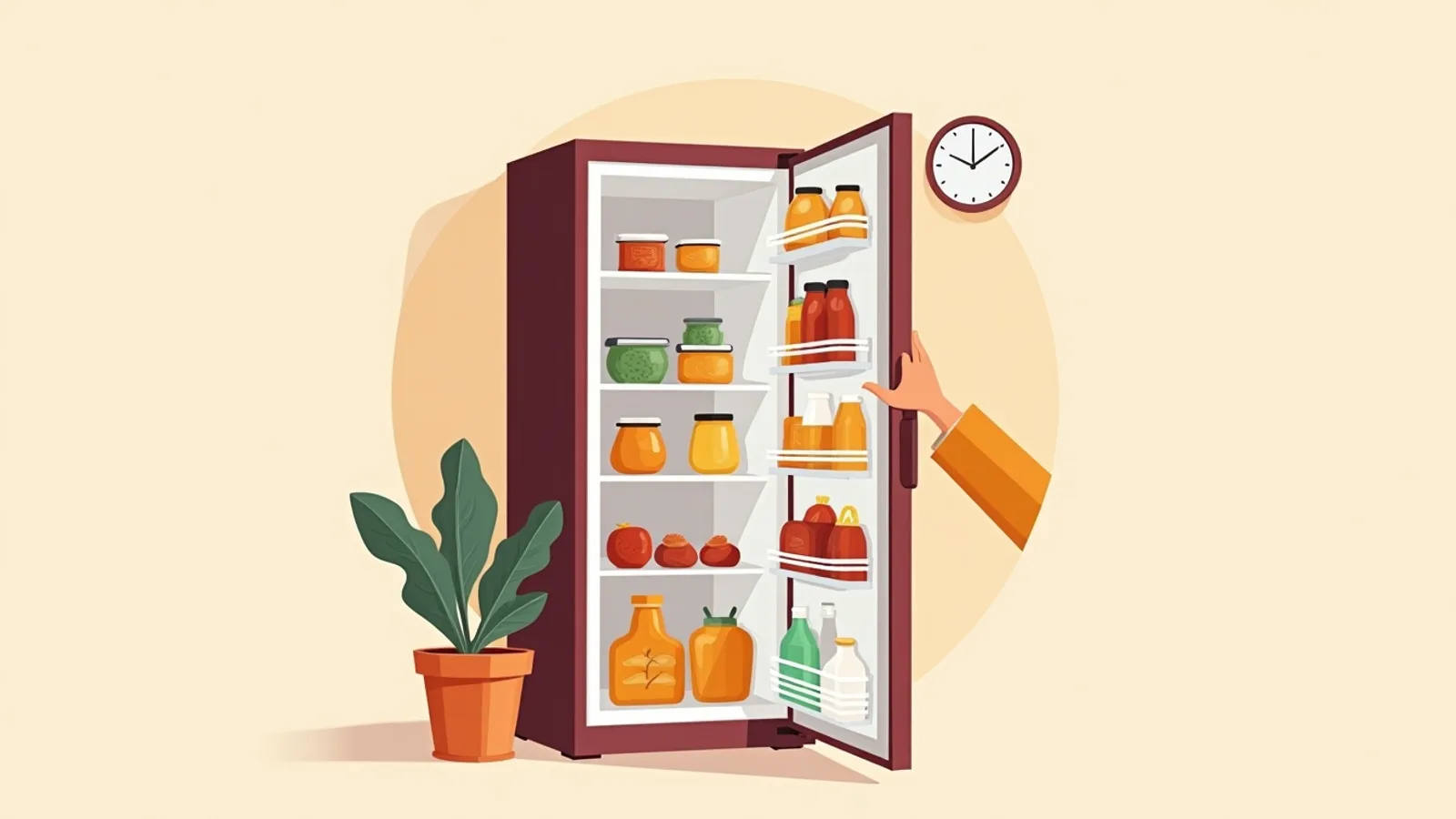
3. The door check (2 minutes). The door is the warmest part of the fridge — every swing bathes it in kitchen air. It’s fine for condiments, butter, and pickles, and quietly terrible for milk, which so many fridges put there by default. If anything perishable lives in the door, relocate it and give the door back to the mustard.
4. The one-line plan (2 minutes). Look at the eat-me-first zone and write one sentence. “Mushrooms and cream → pasta tonight; herbs → freeze in oil.” That’s it. Not a meal plan, not a spreadsheet — one sentence connecting what’s dying to what’s for dinner. If you don’t know what the mushrooms could become, cook backwards from a template, not forwards from a recipe.
Put things where you’ll actually see them
The audit gets dramatically easier if the fridge is arranged for visibility rather than tradition:
- Eye level is prime real estate. It belongs to the food that needs eating soonest — not to the tallest bottles.
- The bottom shelf is the coldest in most fridges. Raw meat and fish live there, which is also basic drip hygiene: nothing should be below raw chicken.
- The crisper drawers are a humidity control system, not just a vegetable basement. Closed vents = high humidity = leafy things stay crisp. Open vents = low humidity = fruit that breathes out ethylene (apples, pears) stops sabotaging its neighbors.
- A cheap fridge thermometer settles the argument nobody knew they were having. You want about 4 °C / 40 °F; a lot of fridges quietly run warmer, which shortens every use-by date in the building.
Make it stick
Habits survive when they’re anchored, so bolt the audit to something that already happens: right before the weekly shop, or Sunday evening while something’s in the oven. Same trigger, same fifteen minutes.
And notice what the audit slowly does to the rest of the week. After a month you’ll know your fridge’s population without opening the door — which half-jar exists, what’s on the edge, what tonight has to be. That mental model, more than any technique, is the thing that empties the bin.
It’s also, not coincidentally, exactly the model we’re teaching shElf to keep for you — the audit that runs itself, in your pocket. But start with the fifteen minutes. The jar isn’t going to evict itself.